
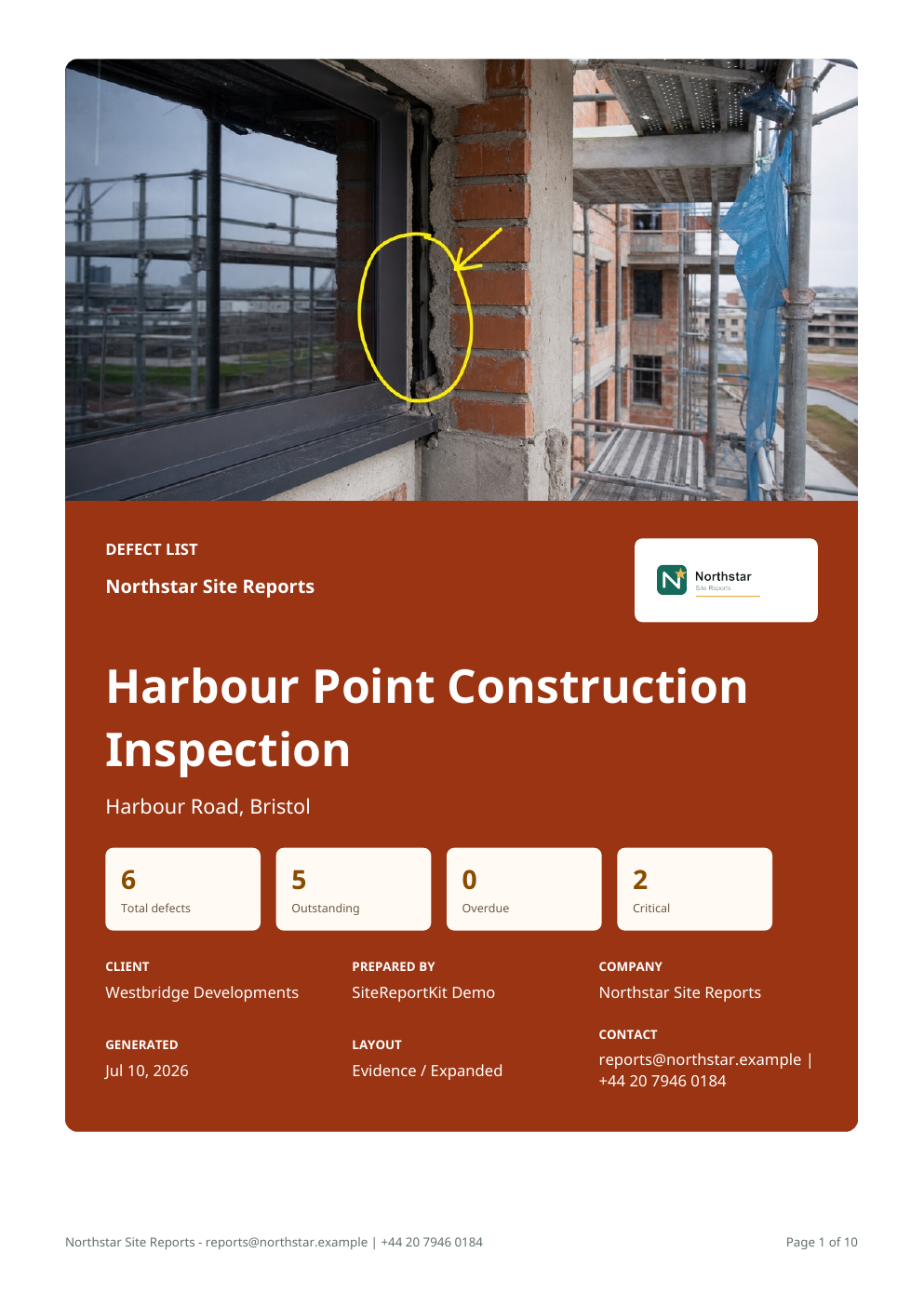
The operational problem
A defensible operational record is clear about what was seen, where, when, by whom, with what evidence, and what happened next—without overstating the software’s authority.
Defect reports can become unreliable when fact, technical opinion, and contractual direction are blended without clarity. A structured report identifies the author and scope, records observable facts, and distinguishes any professional judgment or instruction.
Who this is for: Quality teams, site inspectors, consultants, project managers, contractors, and owners establishing a consistent defect documentation procedure.
What a reliable field record needs
Every item should be understandable without relying on the inspector’s memory. Keep the description factual, make the location findable, show enough photographic context, and write the required action as an outcome that can be checked. Responsibility and due dates make the register actionable; status and closeout evidence make it traceable.
| Stage | Useful output |
|---|---|
| Capture | Area, trade, owner, priority, status, date, notes, and photographs stay attached to one item. |
| Handoff | Generate a full report, a focused action list, or a CSV register from the project record. |
| Follow-up | Retain the original condition, add resolution notes and after evidence, and issue a closeout record. |
A three-stage workflow
Prepare
Define the inspection basis, author, scope, limitations, and issue taxonomy.
Capture and review
Record observable condition, precise location, evidence, relevant reference if appropriate, required action, and responsibility.
Issue and close
Control revisions, issue through the approved channel, verify correction, and retain both before and after evidence.
Field and report checklist
Adapt the checklist to your role, contract, jurisdiction, records policy, and the technical scope of the visit. SiteReportKit organises information; it does not confer inspection authority or make professional judgments for the user.
- Report author and scope
- Inspection date and location
- Observable condition
- Technical reference only when verified
- Required action and owner
- Issue history and closeout evidence
Report quality checks before issue
- Confirm the title, author, date, site, client, scope, and intended recipient.
- Check that item references are unique and locations use one consistent hierarchy.
- Remove duplicates and split conditions that require different owners or closeout decisions.
- Verify captions, annotations, names, dates, status, and required actions against the field record.
- Open the exported PDF, XLSX, or CSV, inspect image legibility, page breaks, filters, and counts, then store the issued version under the project’s records process.